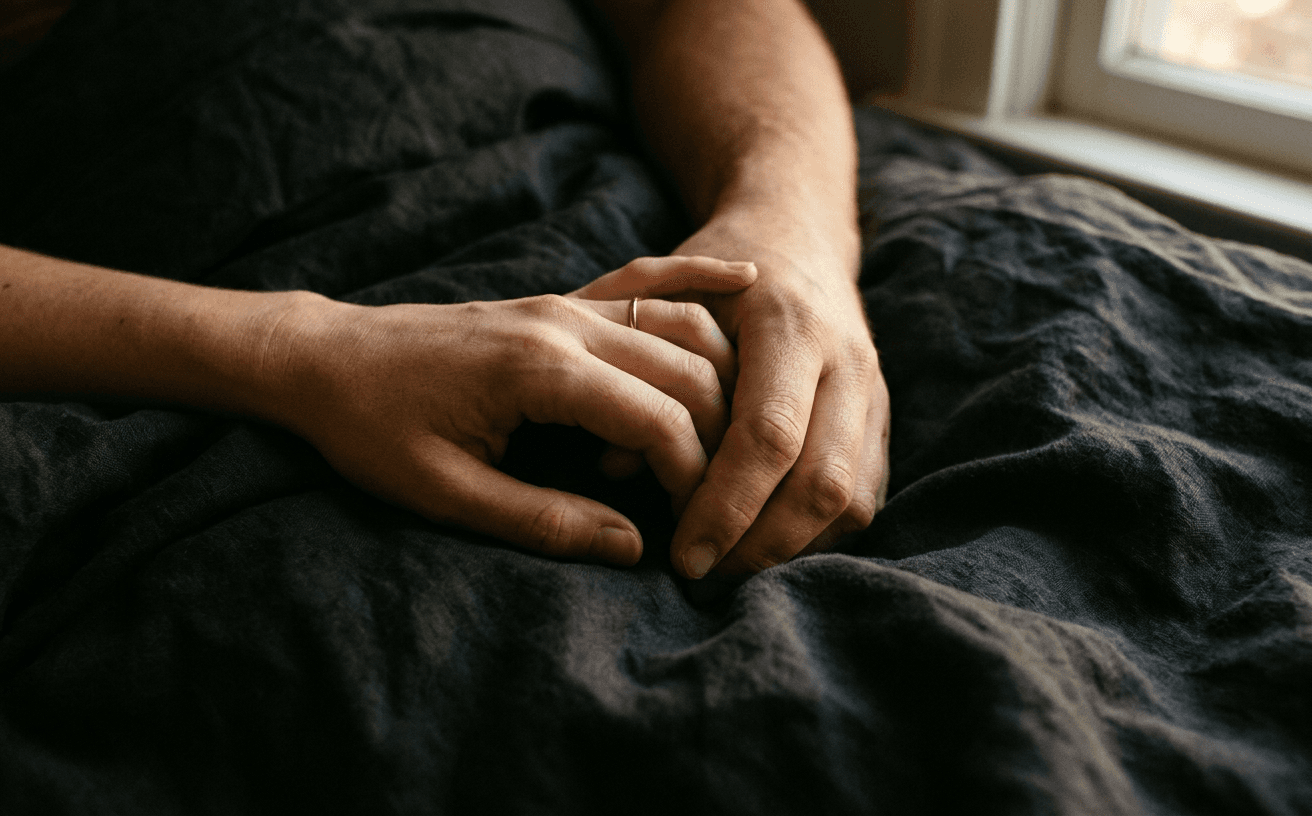
Decide Who the Photos Are For
Before you pick up the camera, decide who the photos are for. Some people take nudes purely for themselves, to enjoy being seen or to feel at home in their body. Others make them for a partner or as part of an exhibitionist kink. Every purpose is valid, and none obliges you to send anything.
Only adults should take or share nude images, and a photo of you is yours to keep private for as long as you like.
Set Up Light You Like
- Use soft window light. Stand or lie beside a window in daytime so light falls across your body from the side. A sheer curtain softens it further.
- Avoid harsh overhead light. Ceiling bulbs cast hard shadows. Switch them off and use a lamp instead.
- Try one warm lamp. A single lamp at low height in an otherwise dim room gives a gentle glow. Move it closer or further away until you like the result.
- Keep the background simple. Tidy the frame and check mirrors and glass. Remove anything identifying, such as documents, mail or distinctive artwork.
Find Angles That Feel Right
- Keep the camera near body level. A phone held very low or very high distorts proportions. Chest or eye level is usually more neutral.
- Step back and use a timer. Close-up phone lenses stretch whatever is nearest the camera. Prop the phone on a shelf or small tripod, set a ten-second timer and free your hands.
- Shoot in pieces. A shoulder line, a back, a silhouette or a hand on a hip can feel more personal than a full-body frame, and shows less.
- Change one thing at a time. Tilt, turn a hip or shift your weight, then take several frames. Small adjustments often make the difference.
Relax in Front of the Camera
- Start clothed. Begin in something you like and take pieces off at your own pace.
- Make the room comfortable. Warm the space, close the door, play music you enjoy and silence notifications.
- Release tension. Stress shows in the jaw, shoulders and hands. Exhale, roll your shoulders and shake out your hands between shots.
- Give your hands a job. Hold fabric, rest them on your hip or touch your hair.
- Stay sober and take breaks. Decisions about intimate images are best made with a clear head. Stop whenever it stops being fun.
- Review later. Do not judge frames in the first minute. Delete what you dislike, or wait a day. Light edits like cropping are fine, but you never need to reshape your body to deserve a photo you like.
Keep Control of Your Images
- Check location data. Photos can carry metadata such as time and place. Look at your camera settings and share tools that remove it.
- Use a locked folder. Many phones offer one. Check that it does not sync to a cloud album or backup someone else can see.
- Think before sharing. Send images only to someone who has asked and who respects your limits. Disappearing-photo features cannot stop screenshots. Never forward or show anyone else's nude.
- Know the law. Rules on sharing intimate images without consent differ by country, and many places treat it as a crime. Images of anyone under 18 can be illegal to make or share.
Our guide to sexting covers more privacy habits for intimate messages, and the feet pics guide has photo and privacy tips of its own.
Nudes, Exhibitionism and Agreements
If being seen is part of the appeal, clear boundaries matter more, not less. Agree who sees the images, whether faces appear, how long they are kept and what happens if the relationship changes. A yes/no/maybe list is a good way to start that conversation.
The BDSM Contract Builder lets partners write down rules and limits together. UNION is a private couples app, and its Features page shows what it offers. Whichever app you use, read how it stores and shares media before sending anything intimate.
More guides live in the Relationship Tools & Intimacy hub.
This article is educational and is not legal advice.
Frequently Asked Questions
Is it okay to take nudes just for myself?
Yes. Many adults take them to enjoy their own body or to feel more at ease with it, and keeping them private is entirely valid.
Should I include my face?
That is your choice. Leaving it out can make an image harder to link to you, but it does not remove all risk, since tattoos, jewellery and rooms can also identify someone.
How many photos should I take?
More than you expect to keep. Early frames are often warm-ups, and the ones you like tend to come after you relax.
What if someone shares my image without consent?
It is not your fault. Save evidence such as links and messages, use the platform's reporting tools and look for local support services or legal advice. Remedies vary by country.